

«Las historias, como la comida, pierden su sabor si se elaboran con prisa» escribe Ngũgĩ wa Thiong’o, autor gĩkũyũ y keniano, en ‘El Brujo del Cuervo’ (2006). Esta máxima prevalece. Múltiples imaginarios globales de lo tropical se han construido priorizando la eficiencia: productos, historias y personas circulan acelerados y empaquetados hacia centros de poder bajo el ala de la globalización. Así, la tropicalidad se potencia en lo que la geógrafa británica Doreen Massey en los años noventa denominaría ‘compresión espacio-tiempo’.
En 2026, mis redes sociales están tan inundadas como cuando llueve en el Paraguay que me crió. Nado en raudales de tweets sobre el Worldwide Latina Belt (Cinturón Latino Global), la macroregión de culturas colectivistas donde conviven ‘Latinos’ y ‘Honorary Latinos’ (árabes, turcos, mediterráneos, africanos, indios, filipinos, isleños de múltiples países, entre otros)[1]. Aunque se comparten algunos paisajes, este neologismo pone el foco en las idiosincrasias legibles como casi-latinoamericanas.
Latinoamérica retumba aceleradamente como el bloque cultural transfronterizo más cohesionado del mundo. La música apresura esto: Bad Bunny va a Japón, Shakira musicaliza su cuarto Mundial, y Karol G es ‘Tropicoqueta’. No sé si saben Luis Fonsi y Daddy Yankee que nos encontramos en la ‘post-Despacito era’. Su canción, podría decirse, marcó el punto de inflexión en la viralización de la tropicalidad latinoamericana en el “resto del mundo” de los años 2010. Los usuarios de internet hoy son agentes y testigos de un veloz alcance cultural que no sabemos si tiene más que ver con el Galeón de Manila, la Gasolina, o el algoritmo de TikTok.
Pero no todas las tropicalidades en el Worldwide Latina Belt emulan esa aceleración y viralidad latinoamericana. Muchas se reinventan y cuestionan despacio, narrando sin tanta prisa, no por miedo a perder el sabor o la aprobación de sus contrapartes no-tropicales, sino porque entenderse tropicales fuera de los caballos de fuerza de la latinoamericanidad y fantasías Euro-Americanas supone un ejercicio prolongado en el tiempo: paciente, quirúrgico, doloroso, cicatrizante, satisfactorio [2].
¿Cómo se vive, entonces, la contemporaneidad tropical fuera de la velocidad apremiante de Latinoamérica?
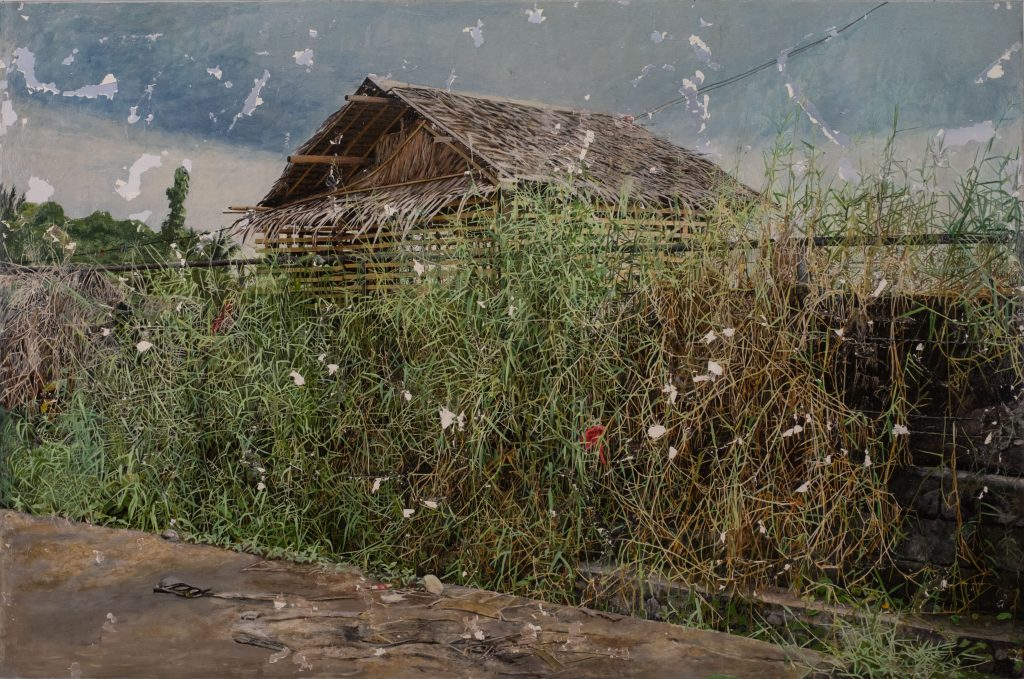
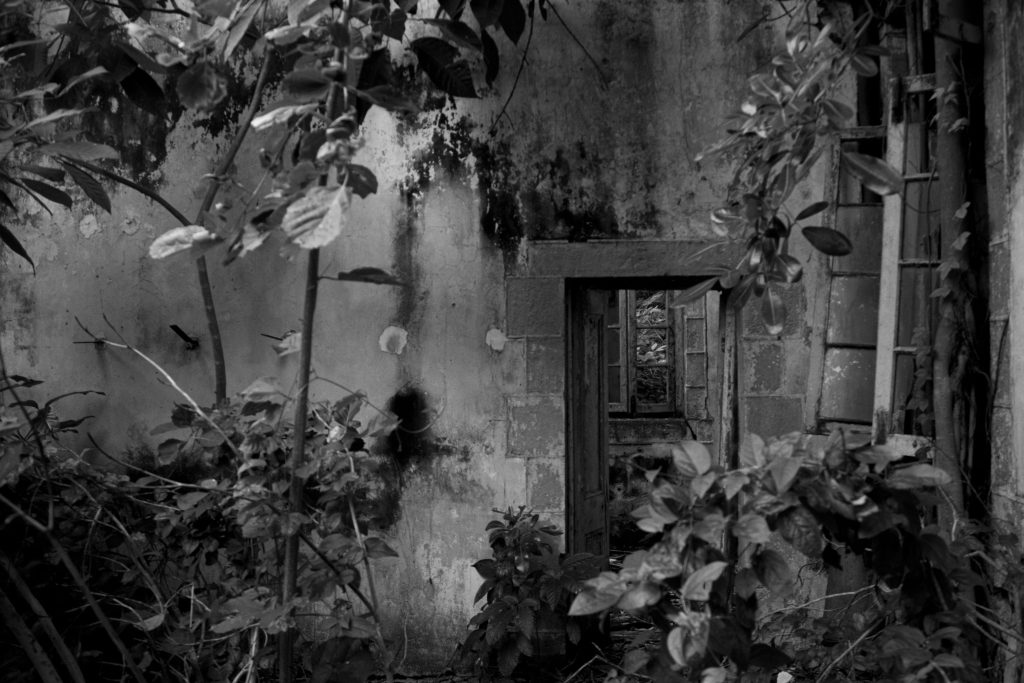
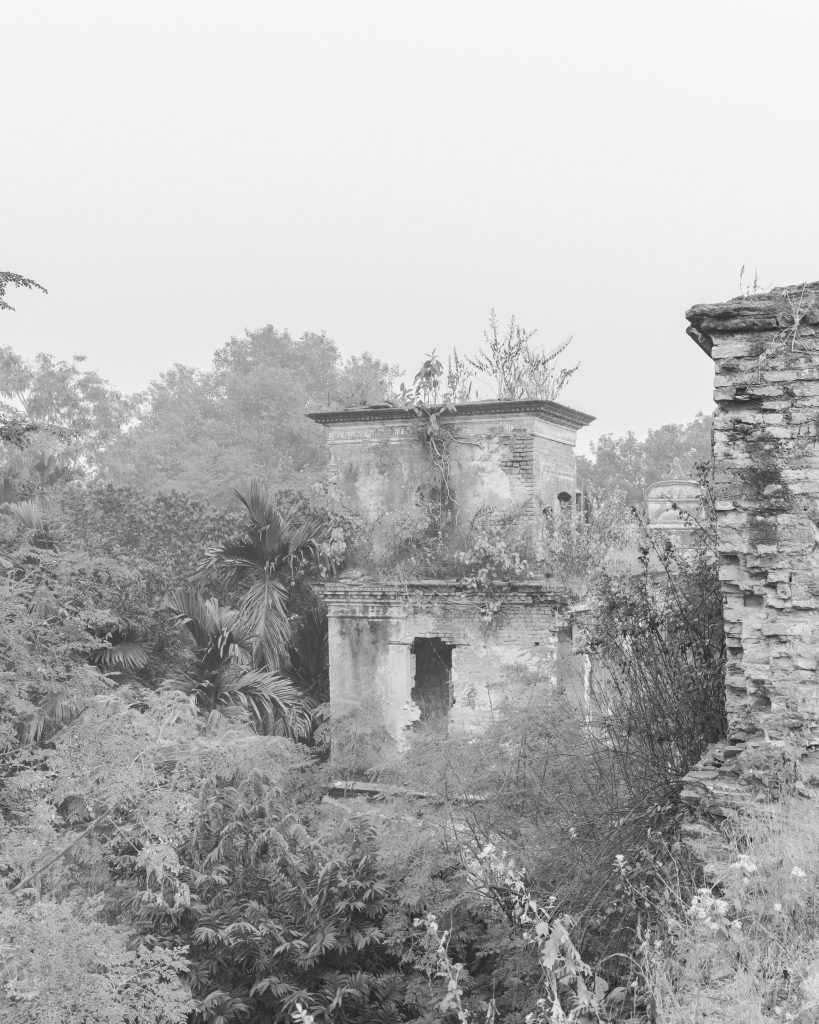
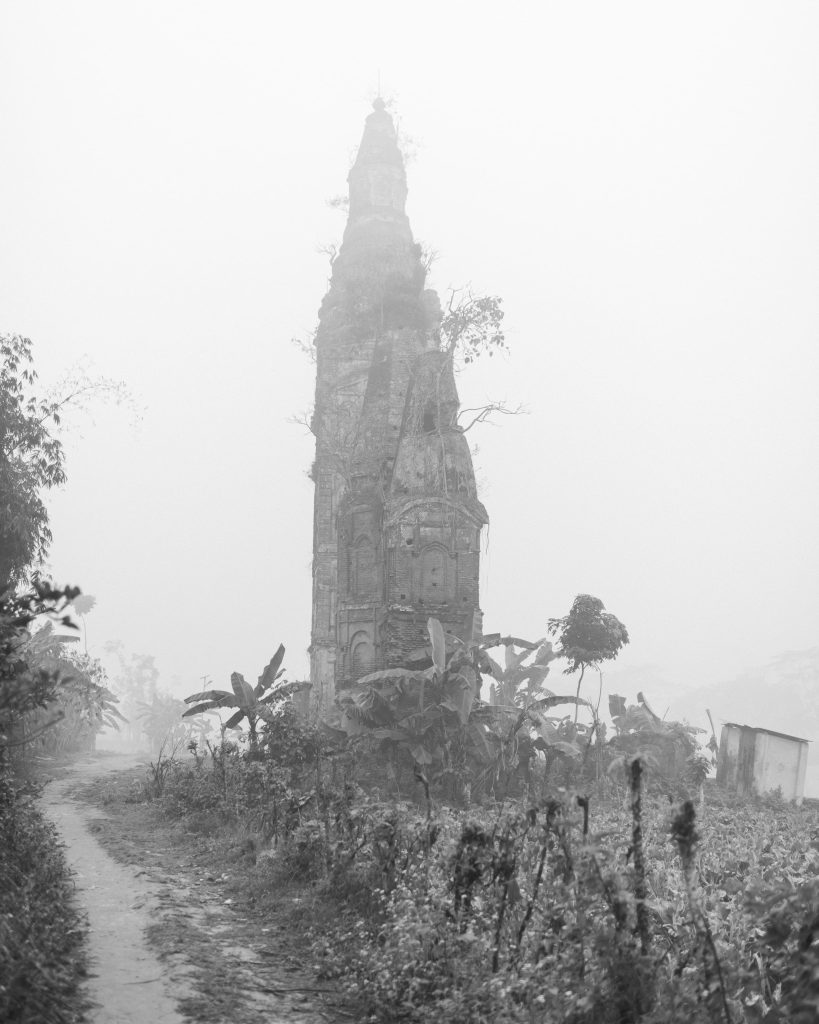
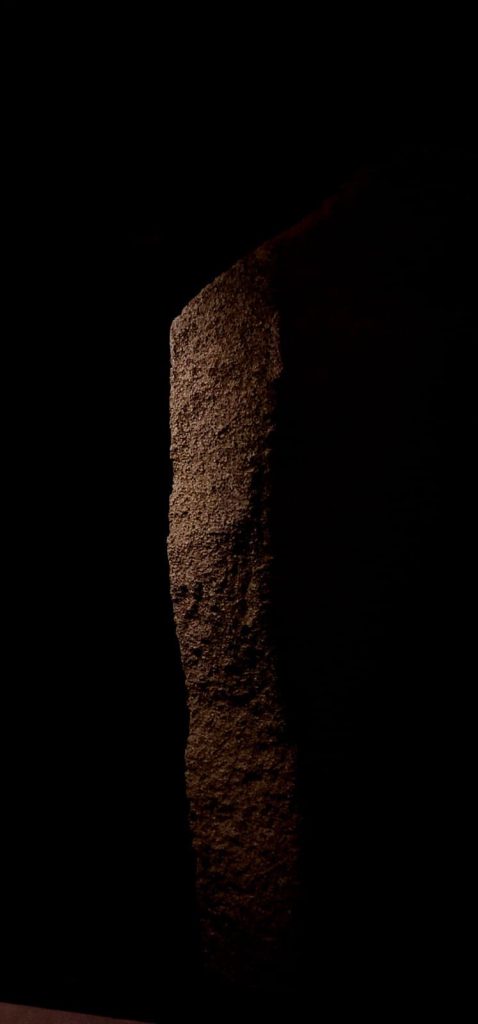
En su serie জীর্ণ / JIRNO / RUINS Spaces of Separation, el fotógrafo bangladesí Sarker Protick lleva diez años retratando la incontrolabilidad de la vegetación y la ruina arquitectónica en Bangladesh; desde vestigios mogoles y las casas de impuestos islámicos, hasta la partición del subcontinente indio [3]. El artista aborda el paisaje y su pasado delicadamente, con imágenes que buscan sobrepasar el espasmo arqueológico, la inescapabilidad del estado-nación postcolonial y reentender el tiempo como el sabio, curandero y hechicero de un territorio cuyas plantas hoy son actores políticos fagocitando las edificaciones que antaño administraron, explotaron, y enseñaron a rezar. Por más que retrata paisajes, su obra es más sobre los constructos sociales e históricos que cocinan a fuego lento el imaginario sobre uno de los países más poblados del mundo. Mientras Europa y América Anglosajona se enfocan en cómo los artistas se preparan para el fin del mundo, Sarker Protick nos permite articular cómo en distintos puntos del planeta ya ha habido varios fines del mundo. Su obra permite plantearse hasta qué punto países tropicales que pierden soberanía territorial, mineral y económica todavía pueden ejercer la soberanía temporal y narrativa.
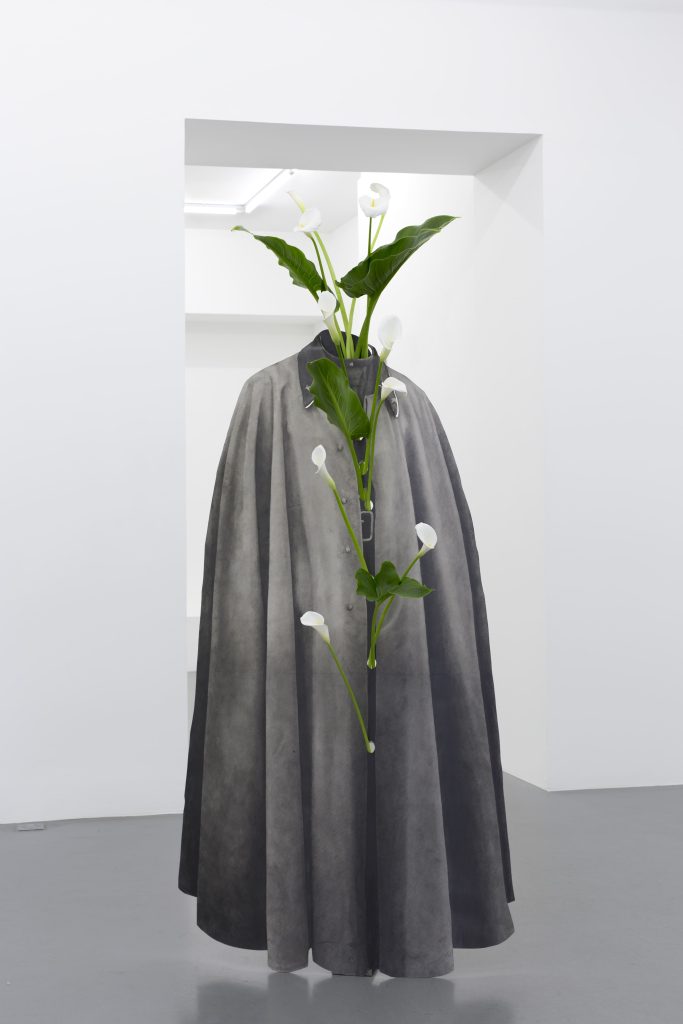
El encuentro desnudo con las arquitecturas tropicales, sus fuerzas, y catástrofes, me remiten al trabajo del artista colombiano Daniel Otero Torres, radicado en Francia e itinerando por Asia y África. Sus obras con agua, especialmente las que ha construido en Marrakech, Dubái, Venecia y Lahore son una profunda investigación de la arquitectura vernacular de la ribera del río Atrato en Colombia, al punto de recrear sus aguaceros al otro lado del mundo [4]. En la obra de Otero Torres lo tropical no es un salsódromo para bailar con lo exótico, lo húmedo y lo caliente. Los decibeles de su trabajo se hallan en cómo retrata la interdependencia entre ser humano, materiales, labor, clima y supervivencia mediante hamacas, casas, y tanques de agua. En Otero Torres vemos una rareza quizás habilitada por su mirada diaspórica: que la tierra y el trópico no se evocan con nostalgia per se, sino con un inventario de propuestas para darse un abrazo de supervivencia duradera, para no perderse en la migraña de la violencia, de la informalidad, y de la humedad. Allí lo tropical no es un espectáculo paisajístico, es infraestructura y afecto intercontinental.
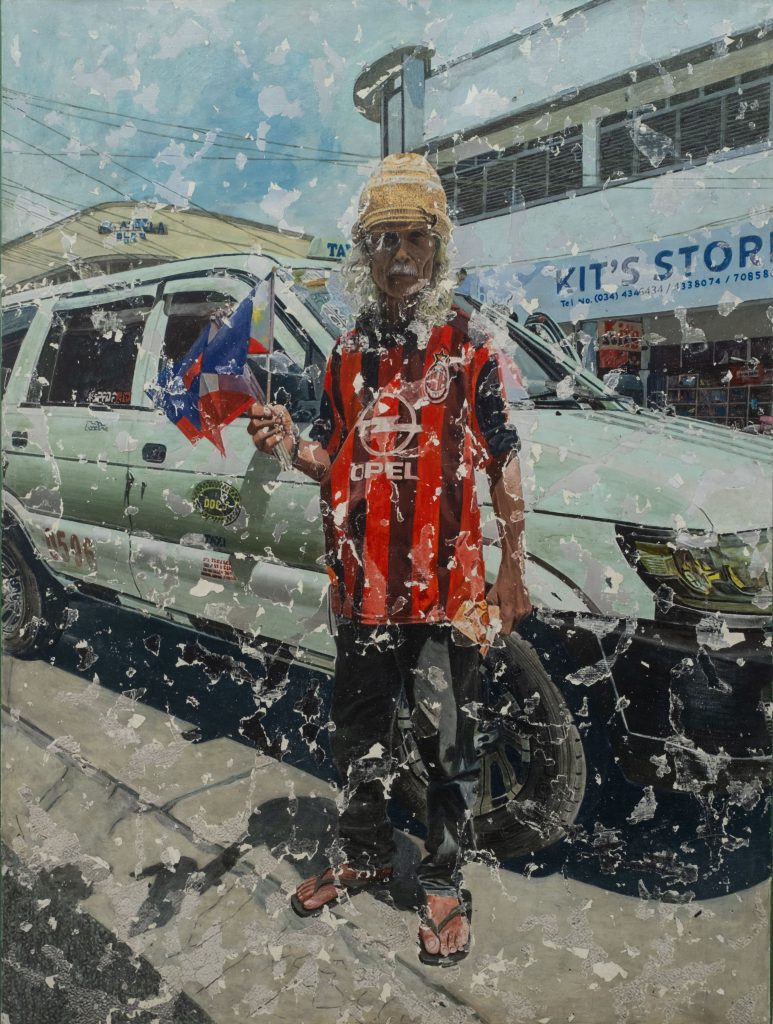
Para entender la tropicalidad desacelerada impera formular planteamientos materiales. El artista filipino Kristoffer Ardeña problematiza la existencia misma de la pintura en su país. Su llamado es a volcarse a lienzos con otro reloj biológico, otras texturas y pinturas para, aunque la ley Filipina prohíbe el divorcio, al menos poder divorciarse de cómo el pintar se lleva a cabo en el archipiélago. Sus obras fantasmas Ghost Paintings utilizan lona alquitranada como lienzo, y pintura elastomérica, la misma que se usa para proteger casas del sol. Con estos, critica cómo el habitar filipino convive forzosamente con plástico, entre la industria, las campañas políticas y el consumo masivo. Sus obras se secan, agrietan y resquebrajan, sus sujetos se desvanecen. Ardeña libera la pintura desde el realismo tropical entendiendo otros lugares y construcciones como lienzos. Es destacable su obra Ghost Painting (Invisible Series): Melon #1 en la cual recubre con pintura elastomérica amarilla la cavidad interna de una sandía. Esta obra sugiere que la pintura tropical Filipina puede y debe reconciliarse con la impermanencia misma, con la reinvención y el hecho de que, en su país, tanto clima como idiosincrasia necesitan de lo que él llama “anamnesis tropical”: hacer de la estructura material de la obra una historia en sí (pintar el interior de la sandía y tratarla como contenedor porque ella ha contenido fruta previamente) y entender que en el trópico la memoria está siempre a merced del clima atmosférico y el clima político, ambos con sus inclemencias. En el trópico desacelerado, tarde o temprano, toda fruta, democracia y toda pintura pueden morir. El trópico desacelerado también se asume perecedero.
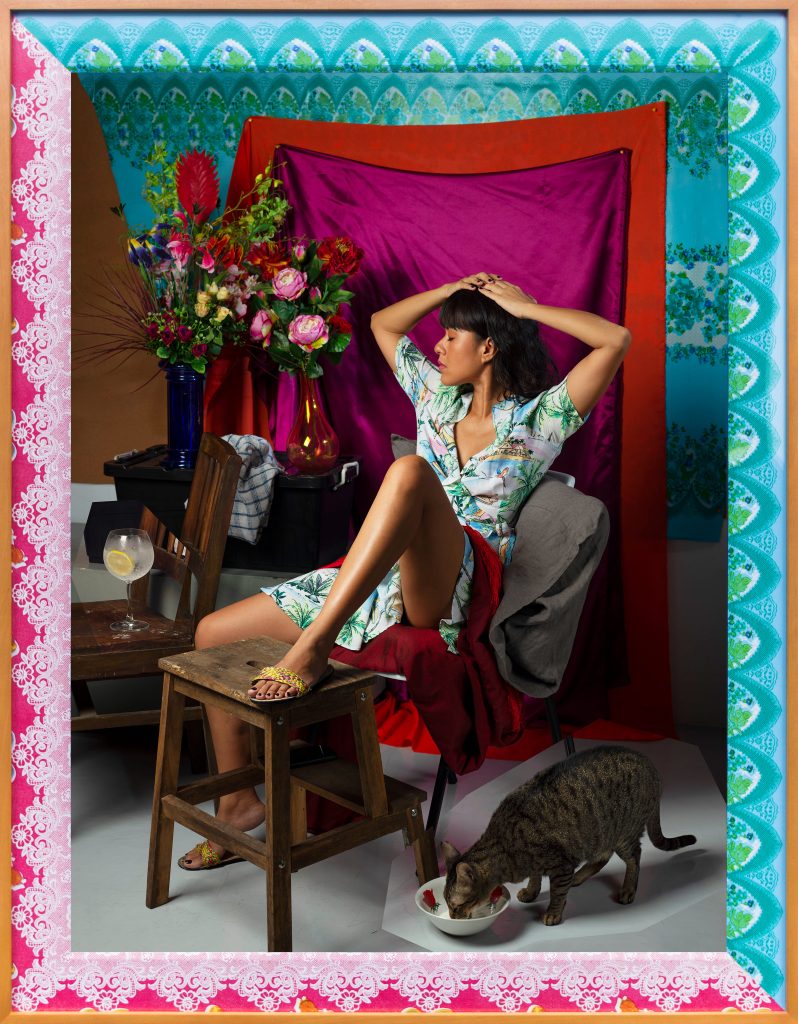
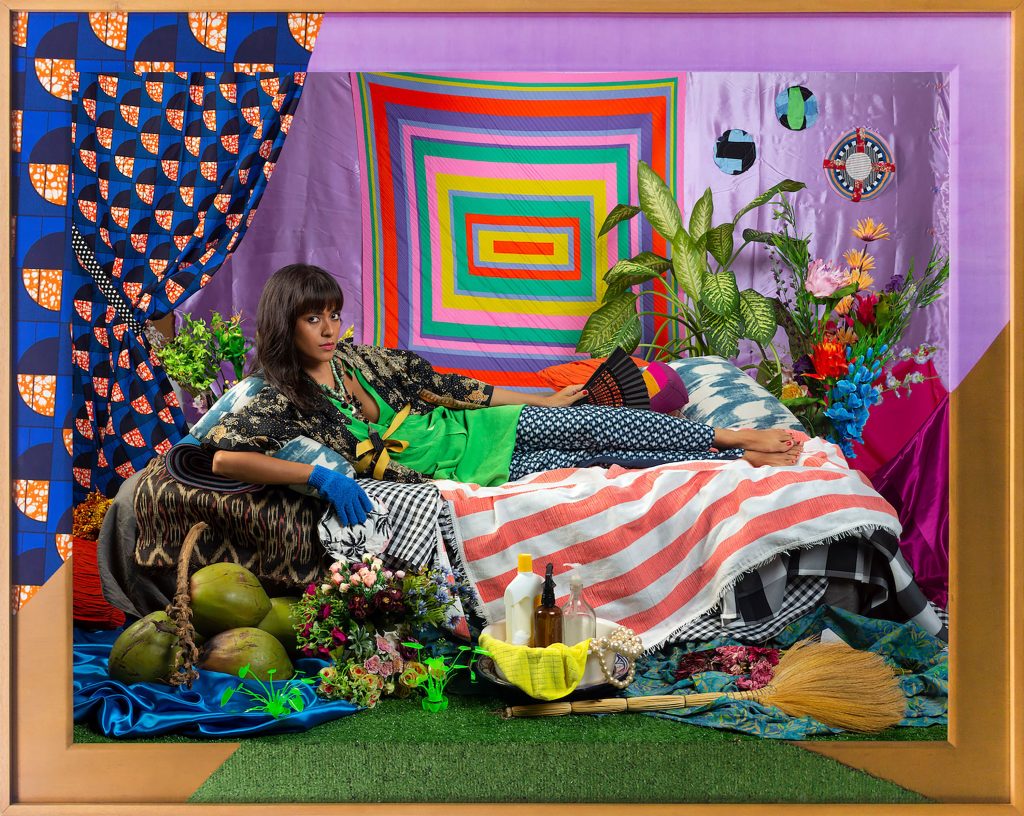
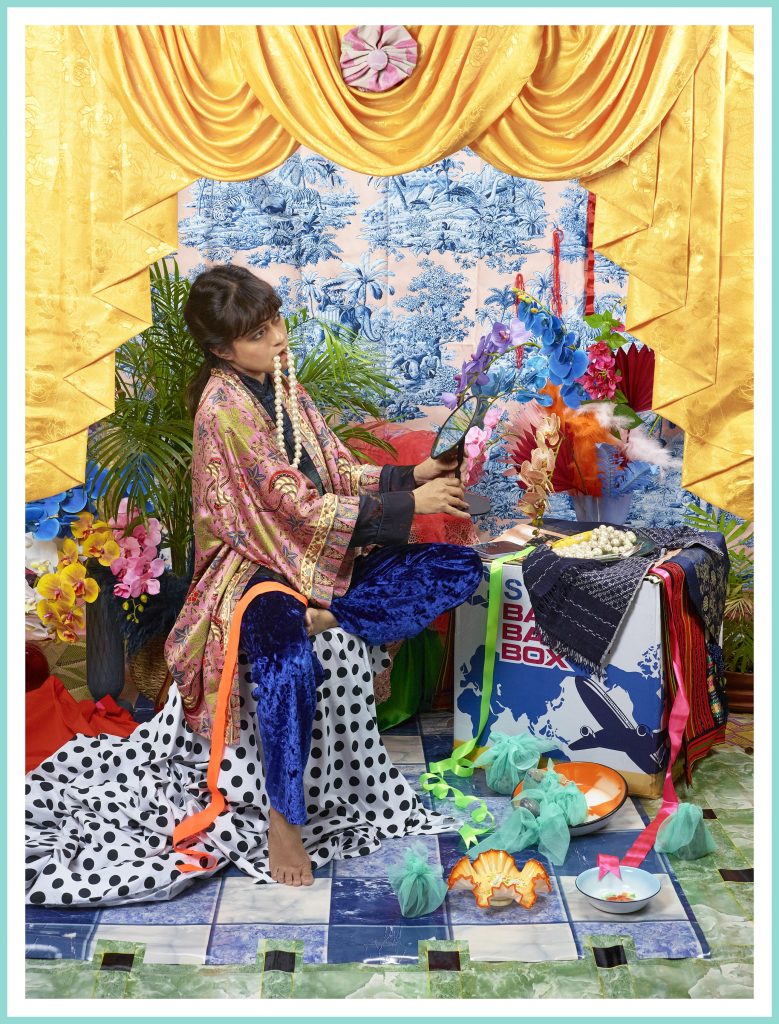
La obra de Ardeña contrasta con el enfoque fotográfico de su connacional Wawi Navarroza. Sus series de autorretrato abordan el menú de configuraciones estéticas de la mujer filipina, desde donde lidera una encuesta material de los objetos, texturas, colores y el repositorio de historias que erigen la filipinidad tropical [5]. Su obra va de los lugares que ella ha sido para cuestionar la alteridad que supone provenir “de lejos”. Desde sus imágenes nos acercamos con contundente delicadeza a la experiencia altamente feminizada de las OFW (Overseas Filipino Workers) así como a los mitos y simbolismos que han caracterizado Filipinas como esa ‘Perla de Oriente’ en la que solapan imperios cada tantos siglos. A lo largo de sus obras un valor prevalece: el del retorno a casa, al ‘yo’ propio que no pide visas para vivir, trabajar o ser. Su obra no es necesariamente una oda a la nostalgia, sino—sin ignorar la diversión y teatralidad—un encuentro pragmático y vibrante con poder retornar y pertenecer a algún lugar del globo sin pedir permiso a nadie. La obra de Wawi Navarroza retrata la zona de confort más luchada y meritoria del mundo: la de la migrante tropical que puede volver.
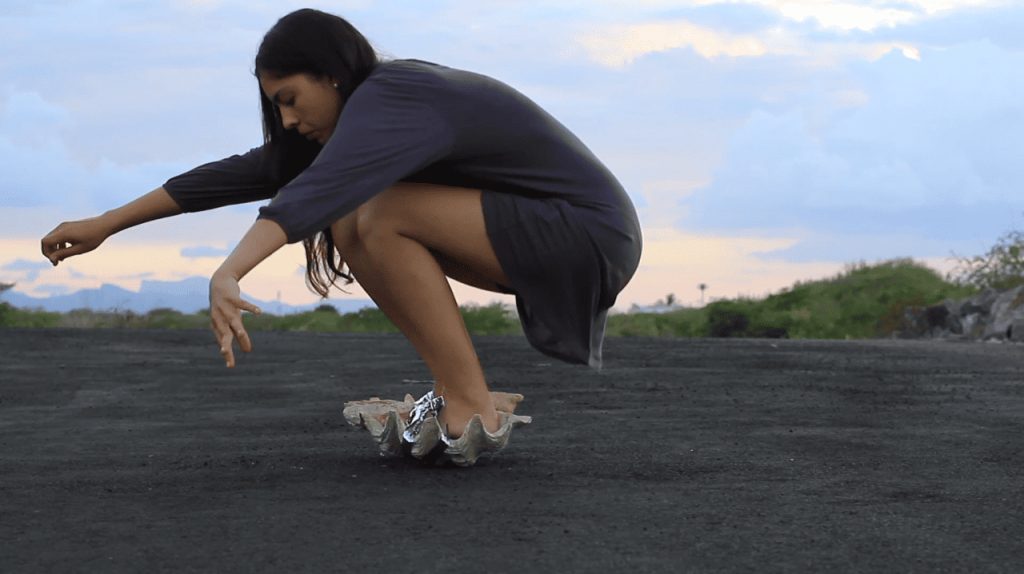
Entre vaivenes, emerge también la mirada tropical sobre lo paradisíaco. La artista Mati Jhurry nos conduce hacia el turismo de masas y el imaginario exótico-mediático que rodea a su país, Mauricio. Desde el performance y el vídeo, reapropia la tropicalidad para retratar el absurdo inherente de ser vista como “exótica” al provenir del Océano Índico africano. En 1 Girl some Cups, la artista prepara y vende cócteles con un lenguaje corporal que hiperboliza el actuar en la industria hotelera y redes sociales. Su obra PPPP es una intervención pública en otro país del Worldwide Latina Belt, Marruecos, en la que personas conforman puzzles efímeros de piscinas delante de las palmas de Marrakech, las mismas que la industria hotelera mundial ha apropiado y trasplantado para crear paraísos globales. Mati Jhurry no teme hacer de su crítica neotropical una experiencia altamente táctil y desmontable. En su trabajo we can escape to the great sunshine la artista intenta hacer zapatos con cocos, conchas y cinta adhesiva para caminar los barrios privilegiados de su país desde otra corporalidad, otra materialidad, otro—parsimonioso y necesario—encuentro con lo absurdo. Actualmente, la artista impulsa la plataforma RESORT desde donde reúne artistas mauricianos para pensar en el hoy y el porvenir desde una isla tropical que, además, es de los pocos países del mundo que no han tenido población indígena [6]. El proyecto de Jhurry emerge en paralelo a la labor del artista y arquitecto también mauriciano Jawaad Issoop, cuya plataforma LESPAS prototipa la primera escuela independiente de arquitectura postcolonial y postnatural en Mauricio, en su momento pensado y replanteado tras su paso, el cual acompañé, por el Institute for Postnatural Studies, Madrid. La obra de Issoop homenajea y también lamenta el desmembramiento, renacimiento y confusión que experimentan la lengua kreol morisien y quienes la habitan. En Mauricio, el lenguaje verbal y no verbal asfaltan un bulevar eterno desde donde estudiar cómo lo tropical es relacional [7].
La condición tropical, sea en Manila, Dhaka, Port Louis, o más allá, no es una confrontación entre lo urbano y rural o lo tradicional y lo viral, sino un termómetro bajo la lengua y la axila de la transformación, la síntesis cultural, la decadencia y la calibración de la crisis material, política y diaspórica. Desacelerar el trópico bien supone entender las geografías, territorios y diásporas fuera de Latinoamérica como espacios donde el tiempo se construye con otras reglas, o inclusive sin ellas. El desaceleramiento tropical no trata de sacrificar la espontaneidad, sino que permite repensar la referencialidad y velocidad con la que la tropicalidad más protagónica del mundo—la latinoamericana—se difunde. Desacelerar el trópico es un carnaval silencioso de gestos artísticos, ejercicios sociales y discursos porosos que proponen experiencias alternativas de tiempo y afectos. Es la posibilidad de entender las tierras donde pega el sol no como un espectáculo exotizado, floral y caluroso, sino como un fenómeno plural, inestable y transversal al cual otorgar sus propios tiempos. Desacelerar el trópico es desechar el cóctel de nostalgias verdes y futurismos idílicos a favor de existir en un presente expandido con sus grises, virus, algoritmos y antídotos. Desacelerar lo tropical es alejarse del espectáculo ajetreado y coreografiado para hacer la siesta despacito con lo mutante y lo sagrado.
NOTAS AL PIE
[1] Aquí merece contrastar este neologismo con el término ‘Latinx’, el cual desde hace dos décadas puede asociarse más a la experiencia plural, LGBTQ+ y diaspórica de comunidades latinoamericanas en los Estados Unidos.
[2] Fuera de la escritura colonial que inmortalizaron a Alexander von Humboldt o Bartolomé de las Casas, es importante situar la tropicalidad latinoamericana como un proceso en auge a principios del siglo XX, entre otros, motivado por el movimiento literario reaccionario a las industrias del caucho, frutas y bananeras puntualmente. La escritura de Jose Eustasio Rivera, Colombiano fallecido en Nueva York, en su novela ‘La Vorágine’ (1924) ejemplifica la policrisis que rodeaba la extracción cauchera de la selva colombiana, extrapolable a toda la parte tropical del continente. Su trabajo entiende la selva como frontera territorial, narrativa y realidad histórica.
[3] Es viable pensar el trabajo de Sarker Protick mediante el lenguaje del autor Amitav Ghosh, también del sur de Asia, quien cuestiona la arbitrariedad de las fronteras nacionales y, a la par, postula que la escala de la crisis ecológica es tal, que la misma existe en el territorio de lo “impensable”.
[4] Entre los primeros vestigios teóricos de tropicalidad latinoamericana difundida en otros continentes se perciben dos fenómenos muy ligados a Brasil: 1. El Manifesto Antropófago de Oswald de Andrade (1928)—hablando del «canibalismo” cultural que Brasil puede ejercer como un espacio de síntesis y reapropiación cultural—y su participación en el modernista Grupo dos Cinco. 2. El movimiento Tropicália de los años 1960 y su llamado a la masiva experimentación artística en pos de establecer nuevos imaginarios políticos, sensoriales y relacionales sobre el país dentro y fuera de él.
[5] El trabajo de Wawi Navarroza y Kristoffer Ardeña puede leerse con progresiva contundencia mediante la mirada del autor filipino Christian Jil Benitez cuyo trabajo aborda simultáneamente el entender del tiempo y objetos propios de la idiosincrasia del archipiélago. Mediante los conceptos de panahon y bagay permiten construir mundos posibles y entender relaciones humano-tiempo-objeto propias de los contextos filipinos.
[6] RESORT puede entenderse con lenguaje comparable al de ruangrupa, en Indonesia, cuyo concepto del lumbung—muy presente en su comisariado de documenta fifteen (2022) representa un sistema de gestión cultural y colectiva muy ligado a la idiosincrasia, la distribución de recursos y conocimiento.
[7] Una mirada útil para entender la realidad mauriciana y de los territorios y ex-colonias francesas de ultramar—muchos retratados como paraísos—es la de Françoise Verges y Malcom Ferdinand, quienes escriben, desde dos generaciones e insularidades diferentes (la índica y caribeña, ambas francófonas) sobre ecologías, configuraciones geopolíticas, bananas, y neo-colonialidad.
DECELERATING THE TROPICS
«Stories, like food, lose their flavor if cooked in a hurry,» writes Ngũgĩ wa Thiong’o in Wizard of the Crow (2006). This maxim prevails. Global imaginaries of the tropics have been constructed by prioritizing efficiency: products, histories, and people circulate at a pace that is both accelerated and packaged to cater to centers of power under the wing of globalization. Thus, tropicality is amplified through what Doreen Massey would term «time-space compression» in the nineties.
In 2026, my social media feeds are as flooded as when it rains in the Paraguay that raised me. I swim through torrents of tweets about the Worldwide Latina Belt, the macro-region of collectivist cultures where «Latinos» and «Honorary Latinos» (Arabs, Turks, Mediterraneans, Africans, Indians, Filipinos, islanders from multiple countries, among others) coexist [1]. Although some landscapes are shared, this neologism focuses on idiosyncrasies readable as quasi-Latin American.
Latin America blasts at full speed as the world’s most cohesive transborder cultural block. Music accelerates this: Bad Bunny goes to Japan, Shakira soundtracks her fourth World Cup, and Karol G is «Tropicoqueta.» I don’t know if Luis Fonsi and Daddy Yankee know that we are in the «post-Despacito era.» Their song, one could say, marked the turning point in the viralization of Latin American tropicality across the «rest of the world» in the 2010s. Today’s internet users are agents and witnesses of a rapid cultural reach that we don’t know whether it has more to do with the Manila Galleon, Gasolina, or the TikTok algorithm.
Nevertheless, not all tropical regions in the Worldwide Latina Belt emulate Latin American-styled acceleration and virality. Many are slowly reinventing themselves, narrating without urgency—not out of fear, but because embracing oneself as tropical outside the confines of Latinidad and Euro-American fantasies entails an exercise that is prolonged in time, one that is patient, surgical, painful, scarring and satisfying [2].
How, then, is tropical contemporaneity experienced beyond Latin America’s pressing speed?
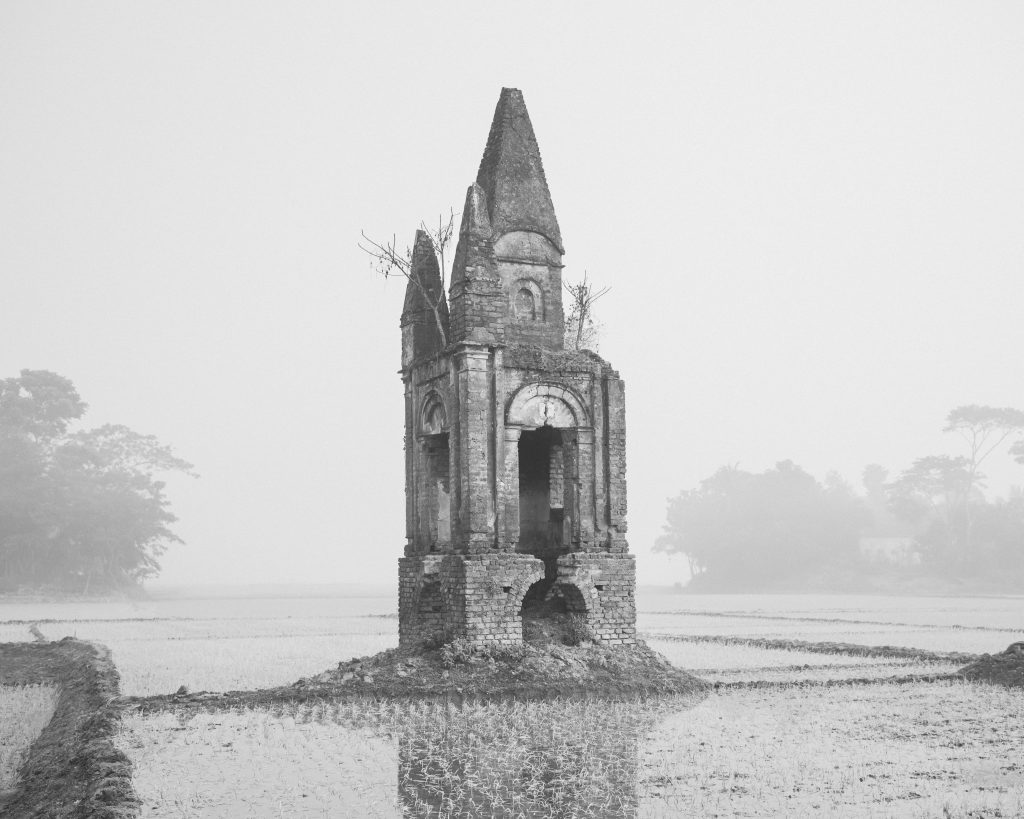
In his ten-year-long series, জীর্ণ_/ JIRNO / RUINS Spaces of Separation, Bangladeshi photographer Sarker Protick portrays the uncontrolled vegetation and architectural ruins in Bangladesh, from Mughal vestiges to the partition of the Indian subcontinent [3]. The artist delicately approaches the landscape and its past, with images that seek to transcend the archaeological spasm, the inescapability of the postcolonial nation-state, and to reimagine time as the wise elder, healer, and sorcerer of a territory whose plants are now political actors, devouring the buildings that once administered, exploited, and taught its people to pray.
Although the series portrays landscapes, his work at large explores the slow-burning social and historical constructs shaping the imaginary about one of the world’s most populated countries. While Europe and the Anglo-Saxon Americas focus on preparing for the end of the world, Protick’s work enables us to articulate that, in many parts of the planet, multiple «ends of the world» have already occurred. His work prompts us to question to what extent tropical countries, losing territorial, mineral, and economic sovereignty, can still maintain temporal and narrative sovereignty.
The naked encounter with tropical architecture, its impetus and catastrophes, veers me to the work of Daniel Otero Torres, based in France and roving across Asia and Africa. His water-focused works, particularly those he has built in Marrakech, Dubai, Venice, and Lahore, constitute a profound investigation into the vernacular architecture of the banks of Colombia’s Atrato River, to the point of recreating its downpours on the other side of the world [4]. In Otero Torres’s work, the tropical is not a dance hall for dancing with the exotic, the humid, and the hot. The decibels of his work lie in the way he portrays the interdependence of humans, materials, labor, climate, and survival through hammocks, houses, and water tanks. In Otero Torres, we encounter a rare gesture perhaps enabled by his diasporic viewpoint: that land and the tropics are not evoked out of nostalgia per se, but through an inventory of proposals for embracing one another in the name of enduring survival, so as not to become lost in the migraine of violence, informality, and humidity. Here, the tropical is not a landscape spectacle; it is an infrastructure and intercontinental affect.
To understand decelerated tropicality, it remains imperative to formulate material propositions. Filipino artist Kristoffer Ardeña problematizes the very existence of painting in his country. His call is to turn toward canvases with a different biological clock, other textures and paints, so that, although Philippine law prohibits divorce, one can at least divorce from the way painting is practiced in the archipelago. His Ghost Paintings use tarpaulin as canvas and elastomeric paint, the same kind used to protect houses from the sun. Through these, he critiques the way Filipino life is forced to coexist with plastic, caught between industry, political campaigns, and mass consumption. His works dry, crack, and crumble; their subjects fade away. Positioned as a tropical realist, Ardeña liberates painting by understanding other places and constructions as canvases. Particularly noteworthy is his work Ghost Painting (Invisible Series): Melon #1, in which he coats the inner cavity of a watermelon with yellow elastomeric paint. This work suggests that Filipino tropical painting can and must reconcile with impermanence itself, with reinvention, and with the fact that, in his country, both climate and cultural idiosyncrasy require what he calls “tropical anamnesis”: making the material structure of the work a history in itself (painting the inside of the watermelon and treating it as a container because it has previously contained fruit), and understanding that, in the tropics, memory is always at the mercy of both atmospheric and political climates, each subject to its own inclement conditions. In the decelerated tropics, sooner or later, every fruit, every democracy, and every painting can die. The decelerated tropics, too, embrace their own perishability.
Ardeña’s work contrasts with the photographic focus of his compatriot Wawi Navarroza. Her self-portrait series address the aesthetic configurations of the Filipino woman, from where she leads a material survey of objects, textures, colors, and the repository of stories that forge tropical Filipinoness [5]. Her work stems from the places she has been, questioning the alterity of coming «from far away.» Through her images, we approach with compelling tenderness the highly feminized experience of OFWs (Overseas Filipino Workers), as well as the myths and symbolisms that have characterized the Philippines as that ‘Pearl of the Orient’ where empires overlap every few centuries.Throughout her works, one value prevails: that of homecoming, coming to the self that does not need visas to live, work, or be. Her work is not necessarily an ode to nostalgia, but—without ignoring fun and theatricality—a pragmatic and vibrant encounter with being able to return and belong somewhere on the globe without asking anyone’s permission. Wawi Navarroza’s work portrays the most fought-for and deserving comfort zone in the world: that of the tropical migrant woman who can return.
Amid ebbs and flows, the tropical view of paradise also emerges. Artist Mati Jhurry drifts us toward mass tourism and the mediatic-exoticized imaginary surrounding her country, Mauritius. Through performance and video, she reappropriates tropicality to portray the inherent absurdity of being seen as «exotic» when coming from the African Indian Ocean. In 1 Girl some Cups, the artist prepares and sells cocktails using body language that hyperbolizes behavior in the hospitality industry and social media. Her work PPPP is a public intervention in another country of the Worldwide Latina Belt, Morocco, in which people form ephemeral puzzles of swimming pools in front of Marrakech’s palm trees—the same ones the global hotel industry has appropriated and transplanted to create global paradises. Mati Jhurry is not afraid to make her neotropical critique a highly tactile and demountable experience. In her work we can escape to the great sunshine, the artist attempts to make shoes out of coconuts, shells, and tape to walk through the privileged neighborhoods of her country from another corporality, another materiality, another—leisurely and necessary—encounter with the absurd. Currently, the artist drives the platform titled RESORT, gathering Mauritian artists to reflect on today and the upcoming from a tropical island that is also one of the few countries in the world without an indigenous population [6]. Jhurry’s project emerges parallel to the work of fellow Mauritian artist and architect Jawaad Issoop, whose platform LESPAS prototypes the first independent postcolonial and postnatural architecture school in Mauritius—conceived and rethought after his time at the Institute for Postnatural Studies in Madrid, which I accompanied. Issoop’s work honors and laments the dismemberment, rebirth, and confusion experienced by the kreol morisien language and those who inhabit it. In Mauritius, verbal and non-verbal language pave an eternal boulevard from which to study how the tropical is relational [7].
The tropical condition, whether in Manila, Dhaka, Port Louis, or beyond, is not a confrontation between the urban and rural or the traditional and the viral, but a thermometer under the tongue and armpit of transformation, cultural synthesis, decay, and the calibration of material, political, and diasporic crises. Decelerating the tropics entails understanding geographies, territories, and diasporas outside Latin America as spaces where time is built with other rules, or even without them. Tropical deceleration does not imply sacrificing spontaneity but allowing us to rethink the referentiality and speed at which the world’s most prominent tropicality—the Latin American one—is disseminated. Decelerating the tropics is a silent carnival of artistic gestures, social exercises, and porous discourses proposing alternative experiences of time and affection. It is the possibility of understanding sun-drenched lands not as an exoticized, floral, and warm spectacle, but as a plural, unstable, and transversal phenomenon to be granted its own rhythms. Decelerating the tropics involves ditching the cocktail of green nostalgias and idyllic futurisms in favor of existence in an expanded present with its grays, viruses, algorithms, and antidotes. Decelerating the tropics is stepping away from the rushed, choreographed spectacle to take a slow siesta with the mutant and the sacred.
FOOTHNOTE:
[1] Here, it is worth contrasting this neologism with the term “Latinx,” which for the past two decades has been more closely associated with the plural, LGBTQ+, and diasporic experiences of Latin American communities in the United States.
[2] Beyond the colonial writings that immortalized figures such as Alexander von Humboldt and Bartolomé de las Casas, it is important to situate Latin American tropicality as a process that was gaining momentum in the early twentieth century, driven, among other factors, by a literary movement reacting against the rubber, fruit, and banana industries in particular. The writing of José Eustasio Rivera, a Colombian author who died in New York, exemplifies in his novel La Vorágine (1924) the polycrisis surrounding rubber extraction in the Colombian rainforest, a phenomenon that can be extrapolated to the tropical regions of the continent as a whole. His work grasps the rainforest as a territorial and narrative frontier, as well as a historical reality.
[3] It is useful to consider Sarker Protick’s work through the lens of Amitav Ghosh, author hailing also from South Asia, who questions the arbitrariness of national borders while also arguing that the scale of the ecological crisis is such that it exists within the realm of the “unthinkable.”
[4] Among the earliest theoretical traces of Latin American tropicality disseminated across other continents, two phenomena closely tied to Brazil stand out: 1. Oswald de Andrade’s Manifesto Antropófago (1928), which articulated the idea of the cultural “cannibalism” Brazil could enact as a space of cultural synthesis and reappropriation, along with his participation in the modernist Grupo dos Cinco; and 2. the Tropicália movement of the 1960s and its call for widespread artistic experimentation aimed at establishing new political, sensory, and relational imaginaries of the country, both within Brazil and beyond its borders.
[5] The work of Wawi Navarroza and Kristoffer Ardeña can be read with increasing force through the lens of Filipino author Christian Jil Benitez, whose work simultaneously explores understandings of time and objects rooted in the archipelago’s cultural idiosyncrasies. Through the concepts of panahon and bagay, he makes it possible to construct possible worlds and to understand human–time–object relationships specific to Filipino contexts.
[6] RESORT can be understood through a framework comparable to that of ruangrupa in Indonesia, whose concept of lumbung—prominent in its curatorial work for documenta fifteen (2022)—represents a system of collective cultural management closely tied to local ways of life, as well as to the distribution of resources and knowledge.
[7] A useful lens through which to understand the reality of Mauritius and of France’s overseas territories and former colonies—many of them portrayed as paradises—is offered by Françoise Vergès and Malcom Ferdinand, who write from two different generations and island contexts (the Indian Ocean and the Caribbean, both Francophone) about ecologies, geopolitical configurations, bananas, and neocoloniality.
Imagen cabecera: Daniel Otero Torres, Shalimar Flow, 2024, técnica mixta, 230×165×2072 cm. Encargo de la Lahore Biennale Foundation, con el apoyo de la Embajada de Francia en Pakistán. Vista de la exposición Of Mountains and Seas, Lahore Biennale 03. Fotografía: Muaz Asim. Cortesía del artista
Ensayo extraído de sirocomag8
Relacionado
ARTÍCULOS RELACIONADOS

La textura de las promesas

Paisajes efímeros del sol en Casa Árabe de Madrid

BEGIN THE BEGUINE

El tapiz de la memoria: Claudia Joskowicz en Jorge López Galería

MARTE 2024: ALTERNATIVAS PERIFÉRICAS. TIEMPOS DE HONESTIDAD

en conversación con Marina Vargas

El guateque de Carlos Pesudo

Vectors

Las estructuras invisibles de Javier Bravo de Rueda

De Paso: el eterno retorno

El delirio realista de Isabel Quintanilla

Todo lo que sugería Giovanni Anselmo

BETWEEN THE ROARS OF THE NIGHT AND THE MURMURS OF THE NEW DAY: la travesía italiana de Javier Ruiz

Dibujar sin papel: Gego en el Guggenheim

en conversación con Semíramis González

en conversación con Co-Net_

Luis Gordillo: pintura o nada

yo no pinto retratos, pinto personas[1]

La tierra baldía y Nancy Holt en el MACBA

en conversación con Germán Bel/Fasim

La hilandera: Maria Lai en Es Baluard
En ninguna parte, en algún lugar
Hic et nunc
La casa como reflejo en un espejo/House as a Mirror of Self
Fasim bajo la luz de Sorolla
A MÍ LO QUE ME GUSTARÍA HACER ES UNA ESTATUA
TOBIAS BRADFORD: LA ABULIA QUE SOÑÓ BUÑUEL

Notas sobre Aftersun (2022), Charlotte Wells
Self Identity is a Bad Visual System(1)

Leche de sueño infantil
ET IN TERRA PAX HOMINIBUS: INDÉSIRABLES EN MUSEO SAN TELMO
en conversación con juan de la rica
Críticos ditirámbicos y el fetiche
Mirar por un círculo en un círculo de miradas
«Hombres libres» de Roberto Diago en la Biennale di Venezia

Tremolar fins que arribi la tempesta

Agnès Varda: Fotografiar, filmar, reciclar
Josune Dega y la palabra compartida

quo vadis?
María Magdalena: el mito
LAS FLORES DEL PARAÍSO – ADRIANA BERGES & JORGE GARCÍA

Julia Santa Olalla en SC Gallery (Bilbao)
